What if the answers to ALS are hiding in places researchers haven't looked closely enough?
At the far end of a motor neuron, in the proteins our cells produce, are subtle changes happening in the body before symptoms ever appear?
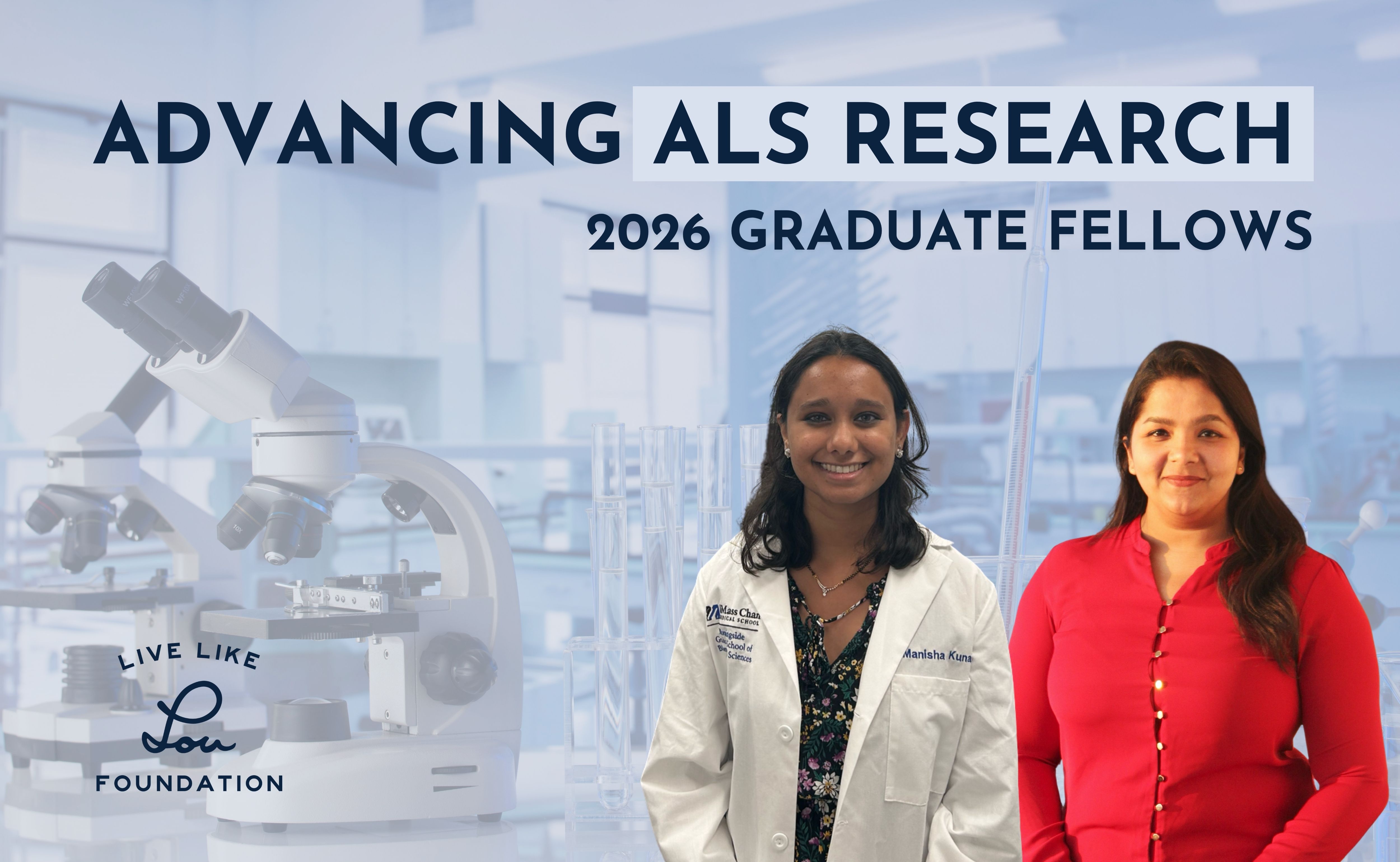
Two early-career researchers are exploring those possibilities as the 2026 Live Like Lou Graduate Fellows.
This year's fellows, Aishwarya Nambiar and Manisha Kunala, are pursuing different approaches to one shared goal: better understanding ALS and finding new ways to diagnose, treat, and ultimately cure the disease.
Through the Live Like Lou Graduate Fellowship, each researcher will have the opportunity to advance innovative work that could shape the future of ALS research.
"When we launched the Live Like Lou Graduate Fellowship in 2025, the goal was simple: put resources behind researchers who are still early enough in their careers to ask the questions nobody else is asking yet," Live Like Lou Scientific Director, Evangelos Kiskinis, said. "Aishwarya and Manisha are perfect examples of that. Whether it’s finding a way to restore a protein ALS takes away or catching signs of the disease before symptoms even begin, their work is exactly the kind of fresh thinking ALS research needs."
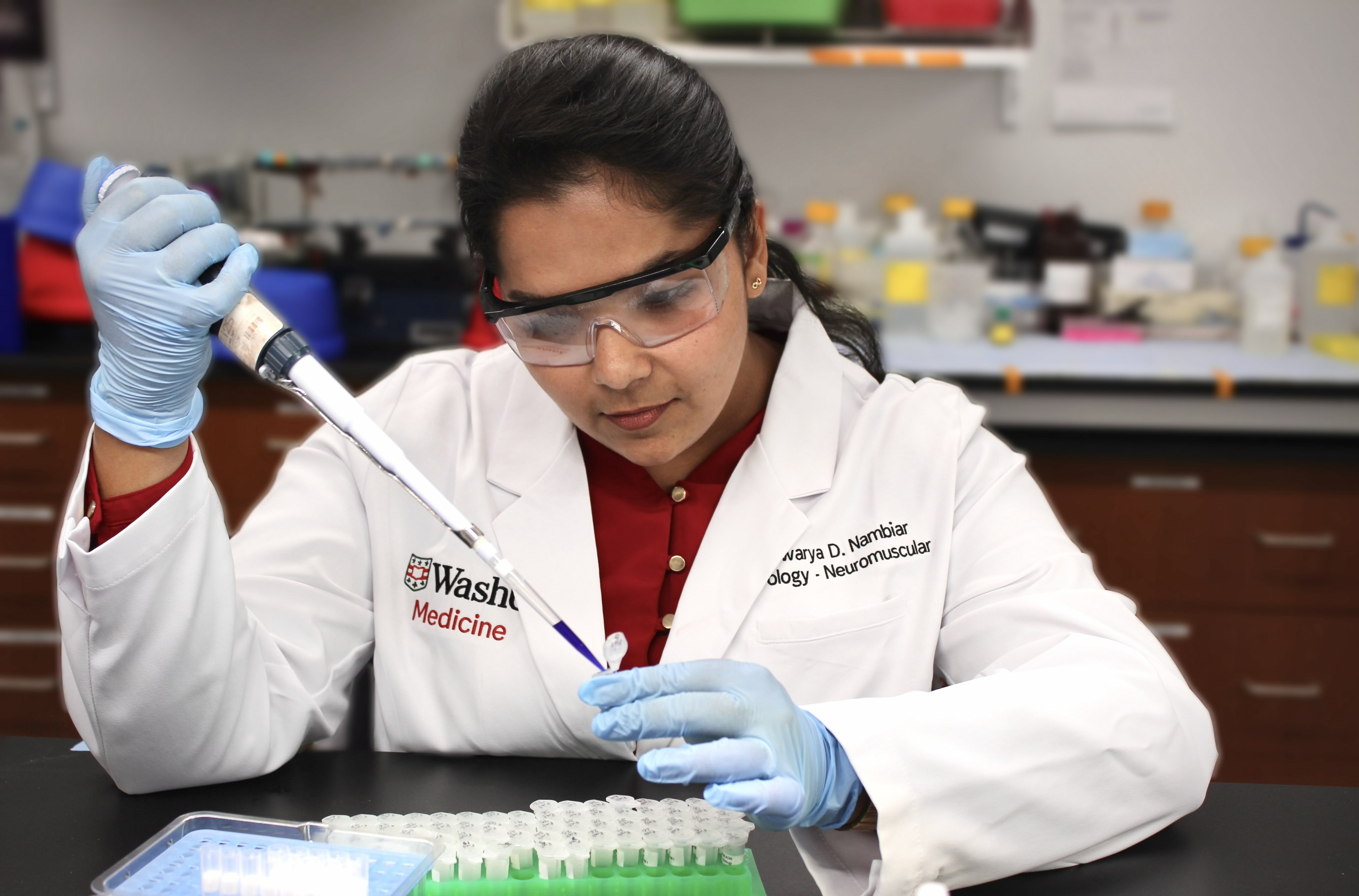
At Washington University in St. Louis, Aishwarya Nambiar is taking a different approach: finding a way to restore an important protein that can be depleted in certain forms of ALS.
Nambiar's project, "Protein-Boosting Antisense Oligonucleotides as a Therapeutic Strategy for TBK1-Amyotrophic Lateral Sclerosis," focuses on ALS linked to changes in the TANK-binding kinase 1 (TBK1) gene.
When one working copy of the gene is lost or impaired, cells may produce too little of the TBK1 protein, contributing to processes that damage motor neurons.
Nambiar is testing antisense oligonucleotides, or ASOs, short DNA-like molecules designed to influence how specific genes produce proteins. Early research has shown that these ASOs can increase TBK1 protein levels in cells from people living with ALS.
Nambiar will refine the most promising ASOs and test whether they can reverse disease-related changes in cells before evaluating the leading candidate in animal models.
If successful, the approach could offer a new way to restore proteins depleted in ALS and potentially other neurodegenerative diseases.
"Aishwarya's research takes an innovative approach to restoring proteins affected by ALS," Live Like Lou Executive Director Wendy Faust said. "We are proud to support research that could lead to new treatment strategies."
What if ALS could be detected before symptoms ever appeared?
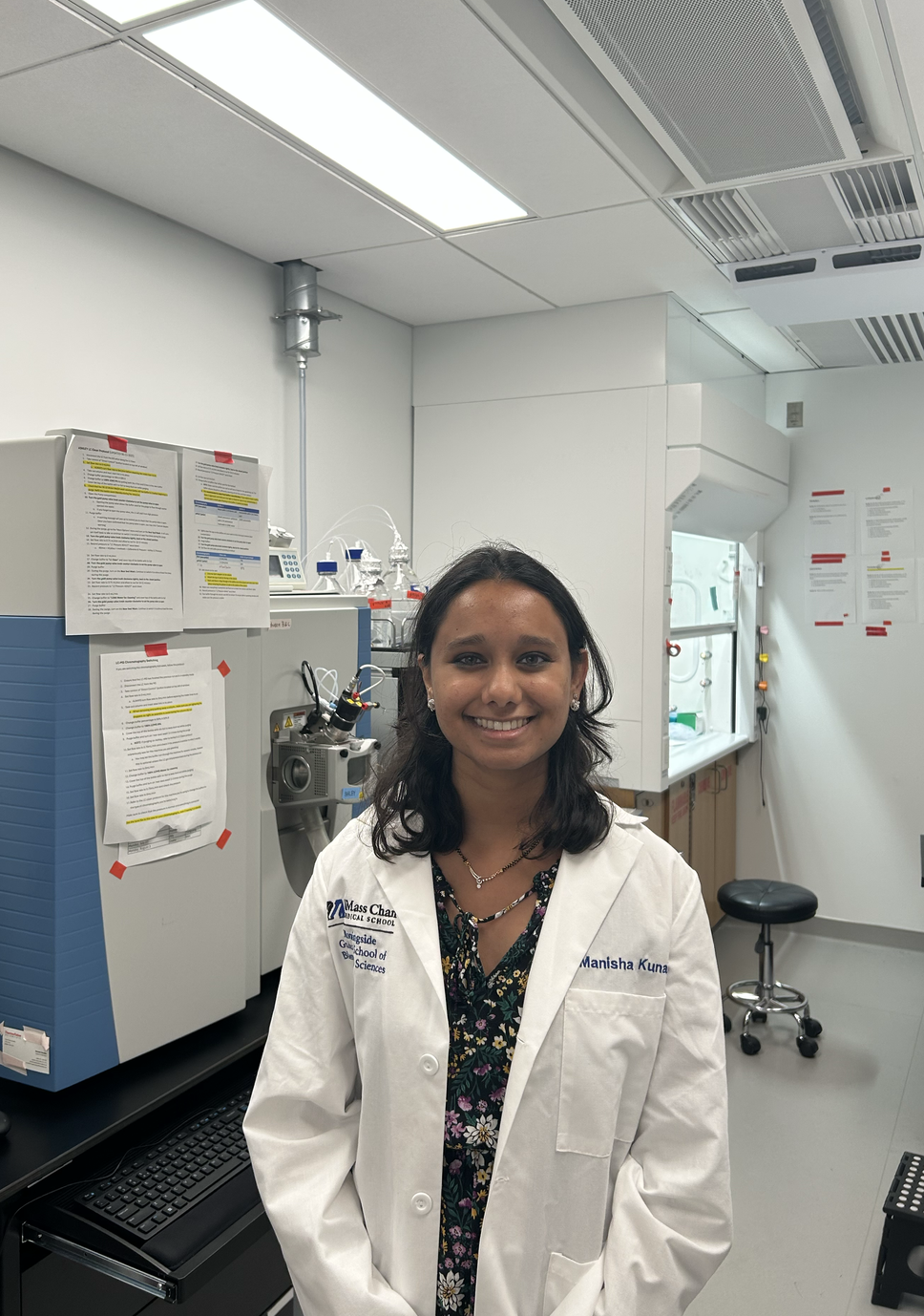
That's the question UMass Chan Medical School graduate researcher Manisha Kunala is exploring.
Her project, "Investigating a New Class of Predictive Metabolite Biomarkers in ALS Onset and Progression," looks at metabolites, small molecules involved in the body's biological processes, as potential early warning signs of ALS.
In preliminary research using a mouse model of ALS, Kunala and her team identified hundreds of metabolic changes that occurred before symptoms appeared. Some of these changes helped predict when symptoms would begin and how severe they would become.
Now, she will analyze blood samples from people with both familial and sporadic ALS to determine which biomarkers may be shared across different forms of the disease.
Her research could help identify ALS earlier, predict disease progression, and reveal new mechanisms that could eventually be targeted with treatment.
"Manisha's work could help us detect ALS before symptoms appear, giving researchers an opportunity to intervene earlier," Live Like Lou Executive Director Wendy Faust said. "That possibility is promising for the future of ALS treatment."
Although their approaches are different, Nambiar and Kunala share something important: they are asking questions that could lead to new ways of understanding ALS.
The Live Like Lou Graduate Fellowship provides up to $50,000 annually for up to two years to graduate students pursuing research focused on new treatments and a cure for ALS.
Supporting researchers at this stage of their careers is an investment in the future of ALS research. It gives emerging scientists the opportunity to take promising ideas further, explore new possibilities, and pursue answers to questions that remain unanswered.
From restoring what ALS takes away to changes that happen before symptoms appear, the 2026 Live Like Lou Graduate Fellows are looking at ALS from new angles.
And every new angle brings the ALS community closer to better answers.