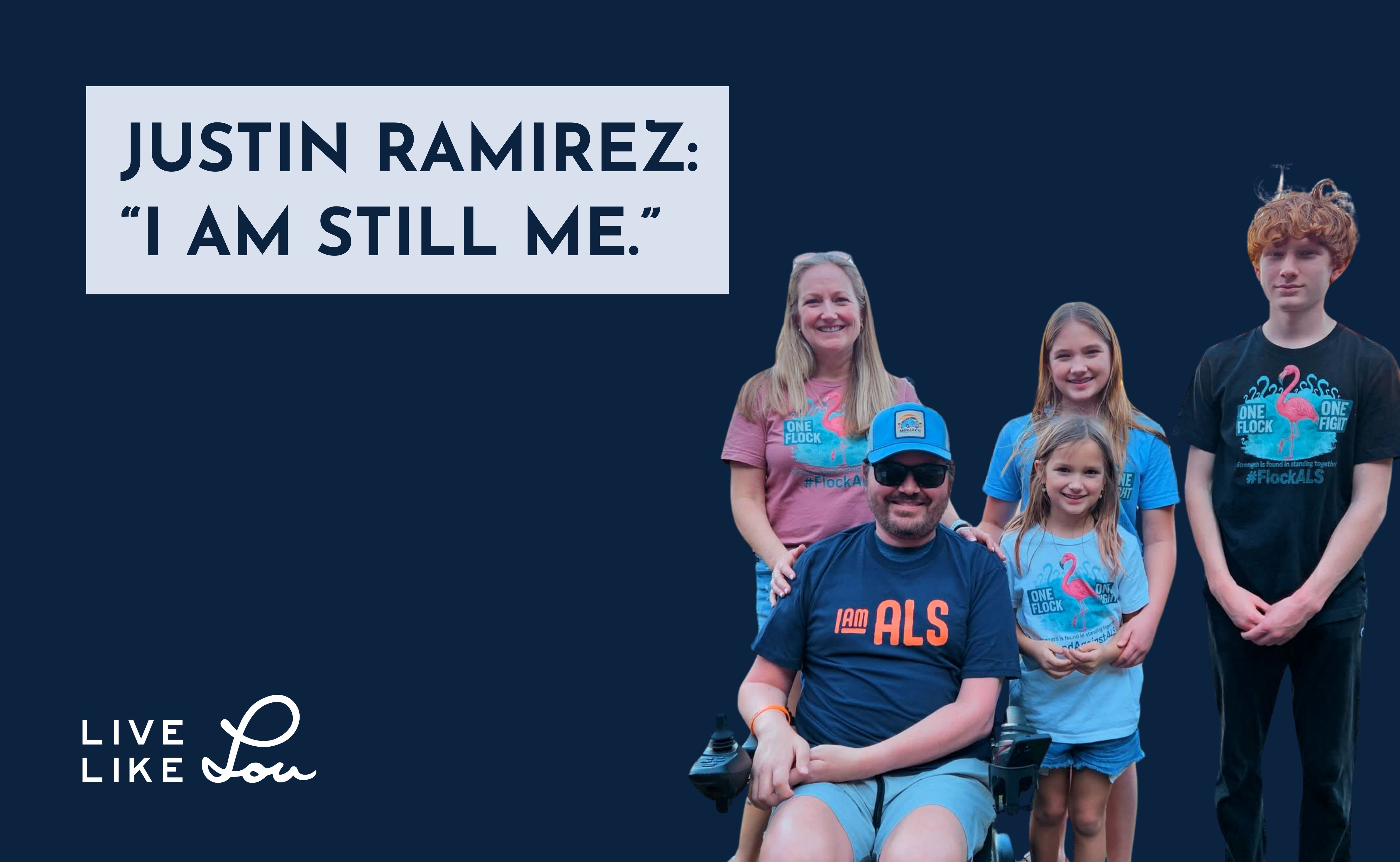
Justin Ramirez doesn’t treat his ALS diagnosis as something that silences him. Instead, he uses his voice, his humor, and his story to advocate for others living with the disease.

A Florida native, Justin has spent much of his life in the Space Coast region of the state. Before ALS, he worked in healthcare, was a hands-on dad, and stayed constantly active with his family and outdoor projects. Today, although ALS has changed nearly every part of his daily routine, he remains deeply engaged in work, family life, and advocacy.
Ramirez was diagnosed with ALS in August 2024, after first noticing symptoms in late December 2023. He described the path to diagnosis as relatively fast, though it took persistence from his mother to push past early dismissal from a neurologist. Now, his parents live nearby and help him every morning, along with his wife and three children.
Even as ALS has limited his mobility and speech, Justin has found a new kind of purpose in sharing his experience. He said that talking about ALS is his version of therapy, and he regularly speaks to health science students, support groups, and advocacy panels. That openness has become central to how he lives with the disease.
“My version of therapy is talking about myself, having people ask tough questions maybe I hadn’t thought about or didn’t want to think about,” said Justin.
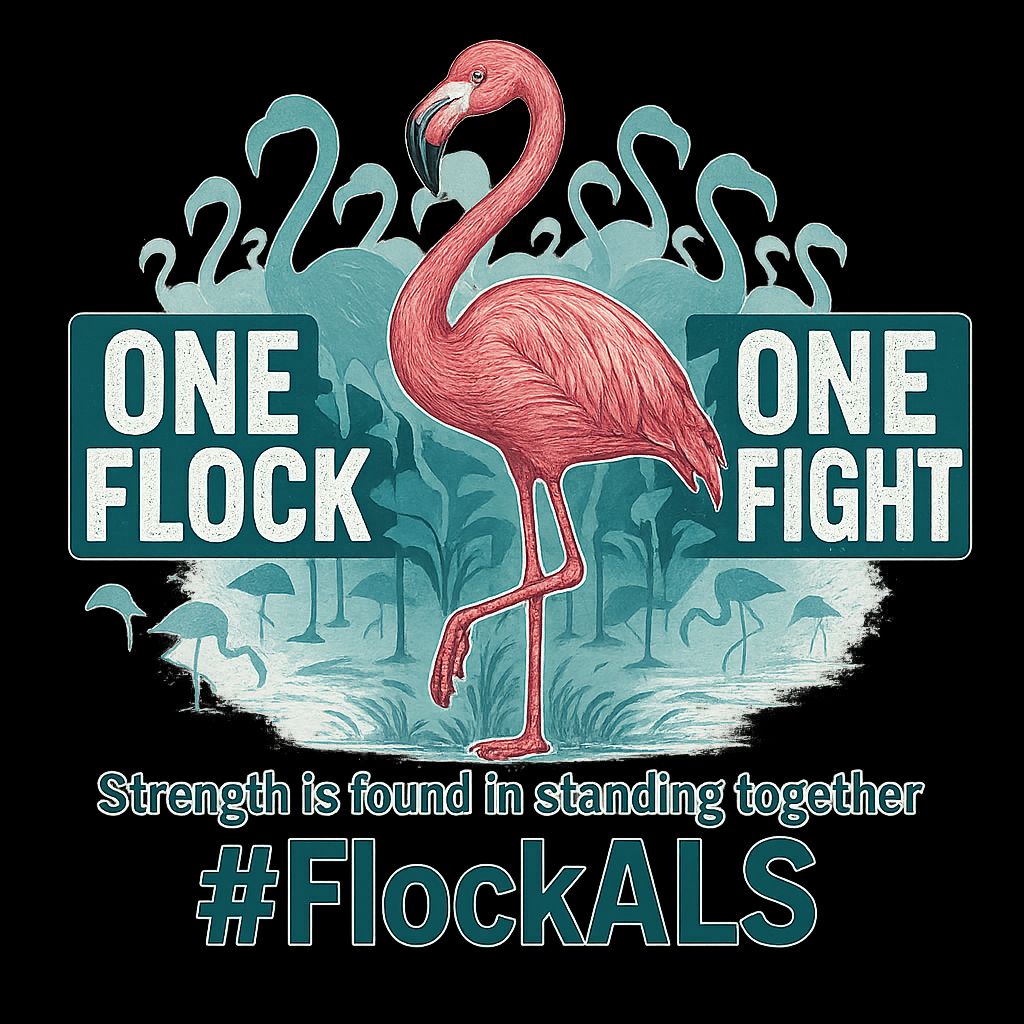
One of the most personal parts of his story is “Flock ALS,” a flamingo-themed identity that grew from an inside joke with his family long before his diagnosis. What began as a playful symbol became a reminder that ALS is not something anyone faces alone. The phrase “flock ALS,” he said, captures both the community he needs and the way the words naturally come out when he says them quickly.
Justin also made one message especially clear: ALS has changed his body, but not who he is. “I am still me,” he said, explaining that his personality, humor, and passion remain intact even as he moves and speaks more slowly. He wants people to understand that a diagnosis does not erase a person’s identity or dignity.
He is equally candid about the role technology plays in his life. Justin uses AI heavily in his work, especially because he can no longer type in the same way he once did. He sees tools like AI and brain-computer interfaces as potentially transformative for people living with ALS, not as replacements for care, but as ways to preserve independence and meaning.
Despite living with ALS, Justin stays busy throughout the week. He continues to work using assistive technology and regularly speaks with health science students, using his story to educate and advocate for others. Beyond his diagnosis, Justin is still Justin, showing up for his kids, family, and community every day. ALS does not define him; instead, he uses his experience to help others navigating similar challenges feel seen and supported.
For Justin, advocacy is not abstract. It is personal, practical, and urgent. He wants younger people, especially those involved in ALS fundraising and awareness, to understand that ALS affects families in the middle of life — spouses, parents, workers, and children. His story is a reminder that ALS awareness is not just about research, but about seeing the people behind the diagnosis.
Live Like Lou was honored to welcome Justin and his family to Jacksonville in February for the Live Like Lou Jax College Baseball Classic, where we had the privilege of recognizing and celebrating them on the field.
Learn more about Justin and all that he is doing in and for the ALS community here.